Marjaryasana Bitilasana Yoga Pose (Cat Cow Pose)
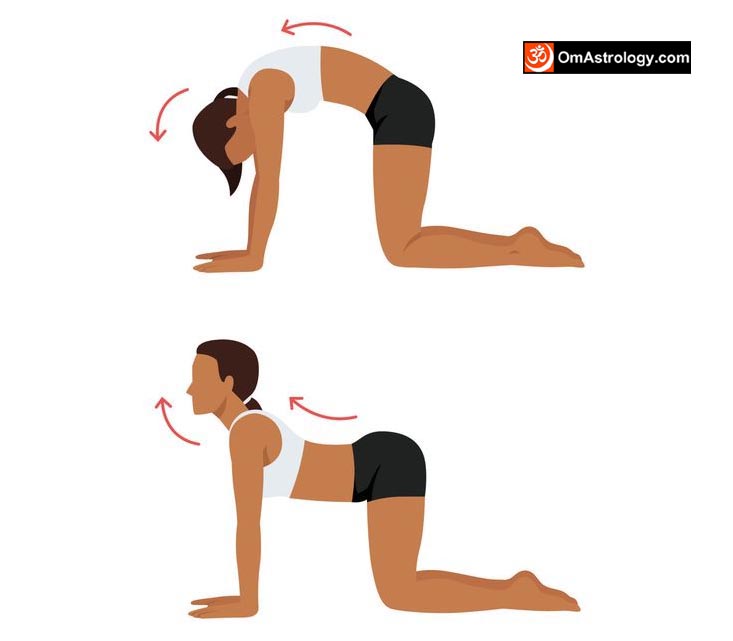
Information on Yoga Asana Marjaryasana Bitilasana (Cat Yoga Pose) Meaning & Uses
The Marjaryasana Bitilasana, commonly known as the Cat Cow Pose, is a gentle yet powerful sequence in yoga that beautifully synchronizes breath with movement. Rooted in traditional yogic practices, this dynamic flow alternates between spinal flexion and extension, helping to awaken the body, improve posture, and release tension from the back and neck. Often practiced as part of a warm-up or within a vinyasa flow, it encourages mindfulness, enhances flexibility, and stimulates the flow of energy throughout the spine. Suitable for beginners and experienced practitioners alike, the Cat Cow Pose serves as a foundational movement that promotes both physical ease and mental calm, making it an essential addition to any yoga routine.
Marjaryasana Bitilasana (Cat Cow Pose) Steps / Instructions / Procedure
Follow the following steps to perform this pose -
- Start on your hands and knees in a tabletop position, with wrists directly under shoulders and knees under hips
- Keep your spine neutral and gaze toward the floor
- Inhale deeply
- As you exhale, round your spine upward toward the ceiling
- Tuck your chin toward your chest
- Draw your navel in toward your spine
- Inhale and arch your back, dropping your belly toward the floor
- Lift your head and tailbone upward
- Open your chest and look slightly upward
- Continue flowing between Cat and Cow poses with your breath
- Move slowly and smoothly, synchronizing each movement with inhalation and exhalation
- Repeat for 8–10 rounds or as comfortable
- Keep your shoulders relaxed and avoid locking your elbows
- Focus on gentle spinal movement rather than forcing flexibility
Marjaryasana Bitilasana (Cat Cow Pose) Medical Health Benefits
There are several health benefits of this pose. Some of them are as follows -
- Improves spinal flexibility and mobility
- Strengthens and stretches the back, neck, and shoulders
- Enhances posture and body alignment
- Relieves tension in the spine and reduces back pain
- Stimulates and massages abdominal organs, aiding digestion
- Encourages deep breathing and increases lung capacity
- Helps reduce stress, anxiety, and mental fatigue
- Promotes better coordination between breath and movement
- Warms up the body, making it ideal for yoga beginners
- Supports blood circulation throughout the body
- May ease menstrual discomfort and mild abdominal cramps
- Improves core awareness and gentle muscle activation
Marjaryasana Bitilasana (Cat Cow Pose) Therapeutic Applications
Marjaryasana–Bitilasana, commonly practiced together as the Cat-Cow sequence, offer significant therapeutic benefits by gently mobilizing the spine and synchronizing movement with breath, making them highly effective for relieving back pain, improving posture, and enhancing spinal flexibility. This dynamic flow stimulates the cerebrospinal fluid and activates the nervous system, promoting mental clarity while reducing stress and anxiety through rhythmic breathing. It is particularly beneficial for individuals experiencing stiffness due to sedentary lifestyles, as it stretches the back, neck, and torso while strengthening the core muscles. Additionally, the alternating spinal flexion and extension support better digestion by massaging abdominal organs and can help alleviate mild respiratory discomfort by expanding lung capacity. Often recommended in both yoga therapy and physiotherapy settings, this sequence is gentle enough for beginners yet deeply restorative, making it an essential practice for overall physical and emotional well-being.
Marjaryasana Bitilasana (Cat Cow Pose) Precautions
Marjaryasana Bitilasana should be practiced with awareness and proper alignment to avoid strain or injury, especially for individuals with pre-existing conditions affecting the spine, neck, or wrists. Those suffering from severe back pain, recent spinal injuries, or conditions like Herniated disc should perform this pose only under professional guidance, as excessive arching or rounding of the spine may worsen discomfort. People with wrist sensitivity or injuries can place their forearms on the mat or use support to reduce pressure, while those with neck issues should keep movements gentle and avoid overextending the head. Pregnant individuals are generally advised to modify the posture to ensure comfort and avoid compressing the abdomen. It is important to synchronize breath with movement and avoid forcing the stretch, as mindful, controlled motion is key to gaining the benefits of this gentle yoga flow without risking strain.
Marjaryasana Bitilasana (Cat Cow Pose) Beginners Tip
For beginners practicing Marjaryasana and Bitilasana, it is important to move slowly and mindfully with your breath rather than rushing through the sequence; start by aligning your wrists under your shoulders and knees under your hips, keep your arms straight but not locked, and gently alternate between arching your back (Cow Pose) as you inhale and rounding your spine (Cat Pose) as you exhale, making sure the movement flows from your pelvis through your spine to your neck; avoid straining your neck by keeping it relaxed and in line with your spine, and if you feel any discomfort in your wrists or knees, you can use a folded blanket or adjust your positioning slightly for better support, focusing more on smooth, controlled breathing than depth of the stretch.
Marjaryasana Bitilasana (Cat Cow Pose) Variations
Marjaryasana Bitilasana variations add depth and versatility to this gentle spinal flow, allowing practitioners to explore flexibility, strength, and breath awareness in creative ways. One common variation includes adding a lateral stretch by wagging the hips side to side while transitioning between cat and cow, which helps release tension in the obliques and lower back. Another approach is the dynamic knee hover variation, where the knees are lifted slightly off the mat during the cat phase to engage the core and build strength. Practicing with extended limbs, such as lifting the opposite arm and leg (similar to a bird-dog pose), enhances balance and coordination while maintaining spinal movement. A seated version of the pose can be done on a chair for those needing a gentler option, still promoting spinal mobility and breath synchronization. Some practitioners also incorporate circular spinal movements instead of linear flexion and extension, creating a fluid, dance-like motion that massages the internal organs and improves overall spinal awareness.
Marjaryasana Bitilasana (Cat Cow Pose) Partnering
Partnering in Marjaryasana Bitilasana, commonly known as Cat-Cow Pose, adds a deeper sense of connection, rhythm, and awareness to this gentle spinal flow. In a partner variation, both individuals typically position themselves facing each other in a tabletop posture, aligning their movements with synchronized breathing-arching the spine into Cow Pose while inhaling and rounding into Cat Pose while exhaling. The presence of a partner enhances mindfulness, as each person becomes attuned not only to their own breath and movement but also to the subtle cues of the other, fostering harmony and trust. Light physical contact, such as holding hands or maintaining eye contact, can intensify the emotional and energetic bond, making the practice feel more engaging and meditative. This shared experience not only improves spinal flexibility and posture but also encourages communication, balance, and mutual support, making it an enriching addition to both yoga practice and interpersonal connection.
Marjaryasana Bitilasana (Cat Cow Pose) Preparatory Poses
Before practicing Marjaryasana Bitilasana, it is beneficial to prepare the body with gentle movements that enhance spinal flexibility and warm up the core and shoulders. Poses such as Balasana help relax the back and release tension, while Tadasana promotes proper posture and body awareness. Incorporating Adho Mukha Svanasana stretches the spine, hamstrings, and shoulders, making the transition into Cat Cow smoother. Additionally, simple seated spinal movements like Sukhasana with gentle neck and back stretches can help improve mobility and breath coordination, ensuring the body is adequately prepared for the rhythmic flow of Cat Cow Pose.
Marjaryasana Bitilasana (Cat Cow Pose) Follow up Poses
After practicing Marjaryasana Bitilasana, the body is warmed up and the spine becomes more flexible, making it ideal to transition into complementary poses that deepen the stretch and enhance relaxation. One effective follow-up is Balasana, which gently releases tension in the lower back and calms the nervous system, allowing the breath to settle. From there, moving into Adho Mukha Svanasana helps lengthen the spine further while engaging the arms and legs, creating a balanced full-body stretch. To build strength and stability, practitioners can flow into Phalakasana, activating the core muscles that support spinal alignment. Finally, transitioning into Bhujangasana or a gentle spinal twist helps counterbalance the forward and backward movements of Cat Cow, promoting flexibility and releasing any residual stiffness, thus completing a harmonious and effective yoga sequence.
Yoga Asanas (Yoga Poses)
- Adho Mukha Svanasana
- Agnistambhasana
- Agnistambhasana
- Akarna Dhanurasana
- Ananda Balasana
- Anantasana
- Anjaneyasana
- Ardha Bhekasana
- Ardha Chandrasana
- Ardha Matsyendrasana
- Ardha Navasana
- Ardha Uttanasana
- Astavakrasana
- Baddha Konasana
- Bakasana
- Balasana
- Bharadvajasana I
- Bhujangasana
- Bhujapidasana
- Bidalasana
- Chakrasana
- Chaturanga Dandasana
- Dandasana
- Dhanurasana
- Dwi Pada Sirsasana
- Dwi Pada Viparita Dandasana
- Eka Pada Koundinyasana I
- Eka Pada Koundinyasana II
- Eka Pada Rajakapotasana
- Eka Pada Rajakapotasana II
- Eka Pada Sirsasana
- Ganda Bherundasana
- Garbhasana
- Garudasana
- Gomukhasana
- Guptasana
- Halasana
- Hanumanasana
- Janu Sirsasana
- Jathara Parivartanasana
- Kandasana
- Kapotasana
- Karnapidasana
- Krounchasana
- Kurmasana
- Makarasana
- Malasana
- Mandalasana
- Marichyasana I
- Marichyasana II
- Marichyasana III
- Matsyasana
- Mayurasana
- Mulabandhasana
- Natarajasana
- Nidrasana
- Padangustha Dhanurasana
- Padangusthasana
- Padmasana
- Parighasana
- Paripurna Navasana
- Parivrtta Janu Sirsasana
- Parivrtta Parsvakonasana
- Parivrtta Trikonasana
- Parsva Bakasana
- Parsvottanasana
- Pasasana
- Paschimottanasana
- Pavanamuktasana
- Pincha Mayurasana
- Poorna Salabhasana
- Prasarita Padottanasana
- Purna Chakrasana
- Purvottanasana
- Salamba Sarvangasana
- Salamba Sirsasana
- Salabhasana
- Sasangasana
- Savasana
- Savithrasana
- Siddhasana
- Sirsasana
- Setu Bandha Sarvangasana
- Shirsha Padasana
- Simhasana
- Sukhasana
- Supta Baddha Konasana
- Supta Padangusthasana
- Supta Virasana
- Svastikasana
- Tadasana
- Tittibhasana
- Tolasana
- Trikonasana
- Upavistha Konasana
- Urdhva Dhanurasana
- Urdhva Hastasana
- Urdhva Mukha Svanasana
- Urdhwamukha Tittibhasana
- Urdhva Prasarita Eka Padasana
- Ustrasana
- Utkatasana
- Uttanasana
- Uttana Shishosana
- Utthita Hasta Padangusthasana
- Utthita Parsvakonasana
- Utthita Trikonasana
- Vasisthasana
- Vatayanasana
- Vibhakta Janushirshasana
- Viparita Chakrasana
- Viparita Karani
- Viparita Shalabhasana
- Virabhadrasana I
- Virabhadrasana II
- Virabhadrasana III
- Vrischikasana I
- Vrischikasana II
- Vrksasana